Pip and Joe’s friendship
Great ExpectationsPip and Joe Gargery’s friendship is the enduring bond Pip damages when he mistakes gentility for worth and feels ashamed of the home Joe has made for him. Joe’s steadfast care outlasts Pip’s class-conscious withdrawal: when Pip is ill, indebted, and remorseful, Joe nurses him, pays his debts, and forgives him without demanding an accounting. Their reconciliation makes friendship not a reward for Pip’s social success but a moral relationship measured by loyalty, gratitude, and care.
Identity and Early Bond
Joe is Pip’s brother-in-law, guardian, and closest companion in childhood. Although Pip’s home has been made difficult by Mrs. Joe Gargery’s temper, Joe has sanctified it for him. The kitchen, parlour, front door, and forge once seemed to Pip places of dignity and promise because Joe’s presence gave them warmth and meaning. Joe’s role is not merely that of a provider: he is the person through whom Pip understands home as a place of affection, and the trusted friend against whom Pip later measures his own failures.
That bond is established before Pip can fully understand its importance. In retrospect, he describes a memorable day as the first link in a long chain that might be made of iron or gold, thorns or flowers. The image gives their friendship a place in the novel’s account of how a life is formed: a seemingly small encounter or change can redirect the relationships and choices that follow. As Pip’s circumstances alter, the bond remains available to him, though he repeatedly fails to treat it with the gratitude it deserves.
Shame, Departure, and Estrangement
Pip’s growing desire to become uncommon changes the way he sees the forge and the people who raised him. After visiting Miss Havisham and Estella, he imagines how Estella would judge Joe’s thick boots and coarse hands. The shame is not caused by any change in Joe; it arises from Pip’s new sense of social comparison. He begins to see the kitchen and forge as common, and the apprenticeship that once seemed a route to happiness as a life of dull endurance. In his adult recollection, he admits that the transformation in his mind had been made, while leaving unresolved how much responsibility belonged to himself and how much to others.
When Pip leaves for London, the affection he has tried to suppress breaks through at the parting. Joe and Biddy throw old shoes after him as a village farewell; Pip initially finds it fortunate that no such display follows the coach through the High Street. But once he has walked beyond the village, he stops at the finger-post and cries. He recognizes that the tears make him more aware of his ingratitude and more gentle, and that if he had cried sooner, Joe might still have been with him. On the coach, he repeatedly considers getting down and walking home, imagining Joe among the men on the road, but each change of horses takes him farther away. The departure is therefore both a physical separation and an early recognition of what his ambition has cost.
Pip’s later behavior in London deepens the estrangement. When Joe visits, Pip is impatient with his awkwardness and unsettled by the contrast between Joe’s rough clothes and the manners Pip now values. He does not understand that his own discomfort has made Joe less at ease. Looking back, Pip explicitly recognizes the imbalance: if he had been easier with Joe, Joe would have been easier with him. Joe, meanwhile, responds to Pip’s coldness with kindness rather than reproach. Pip’s account makes the hurt consequential precisely because Joe does not turn it into an open quarrel; Pip must eventually see that the distance has been produced by his own conduct.
Care Through Crisis
After Pip’s expectations collapse, he recognizes that his attachment to Miss Havisham’s supposed plans and his romantic hopes had displaced his loyalty to Joe. The revelation that Pip had been a convenient object in the household’s designs brings a sharper pain: he had deserted Joe for a future that was never promised to him. Yet his remorse does not immediately make him return. He believes his own poor conduct toward Joe and Biddy is so shameful that their simplicity and fidelity could no longer comfort him. The friendship remains a source of possible consolation, but Pip’s sense of unworthiness keeps him away.
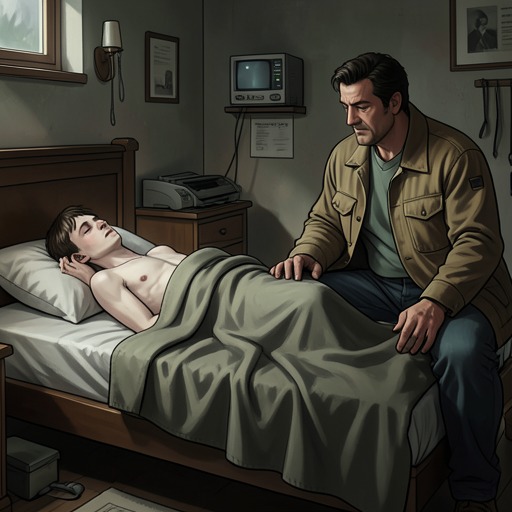
When Pip falls gravely ill, Joe becomes his caregiver. During the fever, the faces around Pip seem to change, but they repeatedly settle into Joe’s likeness. The changing perceptions resolve into a simple recognition: Pip asks whether it is Joe, and Joe answers in his familiar voice. Overjoyed that Pip knows him, Joe lies beside him, puts an arm around his neck, and assures him that they have always been friends. Pip, in turn, begs Joe to look angry, strike him, or tell him of his ingratitude. Joe will not convert care into punishment. Even as Pip asks for judgment, Joe answers with affection and the prospect of a future ride together.
As Pip recovers, he recognizes Joe’s tact as well as his kindness. Joe declines to revisit childhood matters that might cause unnecessary pain, and Biddy has helped prepare him to understand Pip’s past without turning it into an accusation. Pip is unsure whether Joe knows that his great expectations have dissolved, but he sees that Joe’s restraint is not indifference. Their old intimacy briefly returns while Pip is wholly dependent on him. As Pip grows stronger, however, Joe becomes less at ease, and Pip understands that Joe fears the familiar closeness will again be withdrawn when Pip no longer needs him. The easing of that closeness is a quiet consequence of Pip’s earlier conduct: Joe has reason to doubt whether Pip will remain faithful in prosperity.
Forgiveness and Material Loyalty
Before Pip can confess everything he intends to say, Joe leaves. Pip wakes resolved to speak with him, only to find Joe’s box gone and a short letter explaining that he has departed because Pip is well again and will do better without him. Enclosed is a receipt for the debt and costs on which Pip had been arrested. Pip had supposed that the proceedings were merely suspended during his illness; he had not known that Joe paid the money. The receipt establishes the practical force of Joe’s friendship: he has used his own resources to protect Pip from the consequences of debt, without making the payment a claim on Pip’s gratitude.
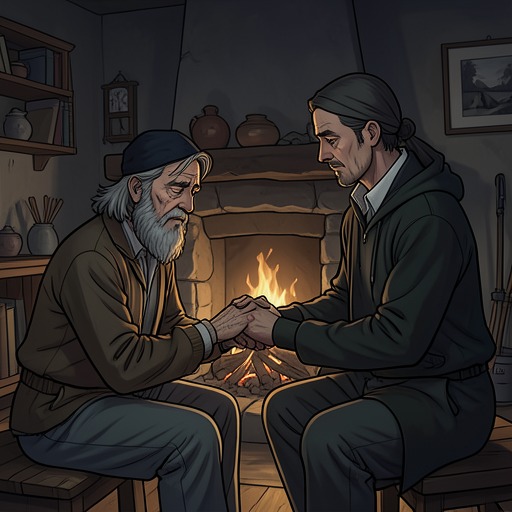
Pip goes to the forge intending to confess, repent, and tell Biddy how much he has changed. He also resolves to earn back the money Joe spent to keep him out of prison. But he understands that repayment cannot cancel the moral debt, even if he could return the amount a thousand times over. When he tells Joe and Biddy that he will be going abroad and will not rest until he has worked to repay them, he asks them to forgive him and to trust that he may become better. Joe answers that he forgives Pip, if there is anything to forgive; Biddy joins him. The qualification is characteristic: Joe refuses to make himself a creditor in affection, even though his actions have given Pip every reason to feel indebted.
Reconciliation and Significance
Pip’s gratitude does not erase his earlier shame or make their histories interchangeable. He acknowledges that he once meant to desert Joe, while Joe recalls the relationship as an enduring friendship rather than a balance of injuries. During Magwitch’s final illness, Joe remains with Pip and Magwitch, and Joe says that Pip has been more comfortable beside him under a dark cloud than when the sun shone. The contrast reverses Pip’s earlier assumptions about prosperity: closeness is not proved by success or social standing, but by remaining present in difficulty. Pip presses Joe’s hand in silence, unable to forget that he once intended to abandon him.
The friendship’s importance lies in the difference between what Pip once mistook for gentility and what Joe consistently practices. Pip’s aspirations make him read Joe’s clothes and manner as evidence of inferiority; illness and failure expose that judgment as morally shallow. Joe’s generosity is not a declaration that Pip’s behavior did no harm: Pip himself recognizes the hurt, the distance, and the debt. But Joe’s refusal to retaliate, his care during illness, his payment of Pip’s costs, and his final forgiveness preserve a bond that Pip had treated as expendable. Reconciliation does not undo the separation. It allows Pip to name his ingratitude, accept Joe’s enduring loyalty, and carry the knowledge of their friendship into the life beyond the forge.